Types of Content
In Bloxsnap, you'll frequently be working with Content Types that define the content on your website and its behavior. Because we covered managing basic types of content on the previous page, this is a more exhausitve look at each of the current content types and how they work.
📝 Text & Textarea
Text: A single-line, plain-text field capped. Best for titles, labels, or short text strings where layout predictability
matters.
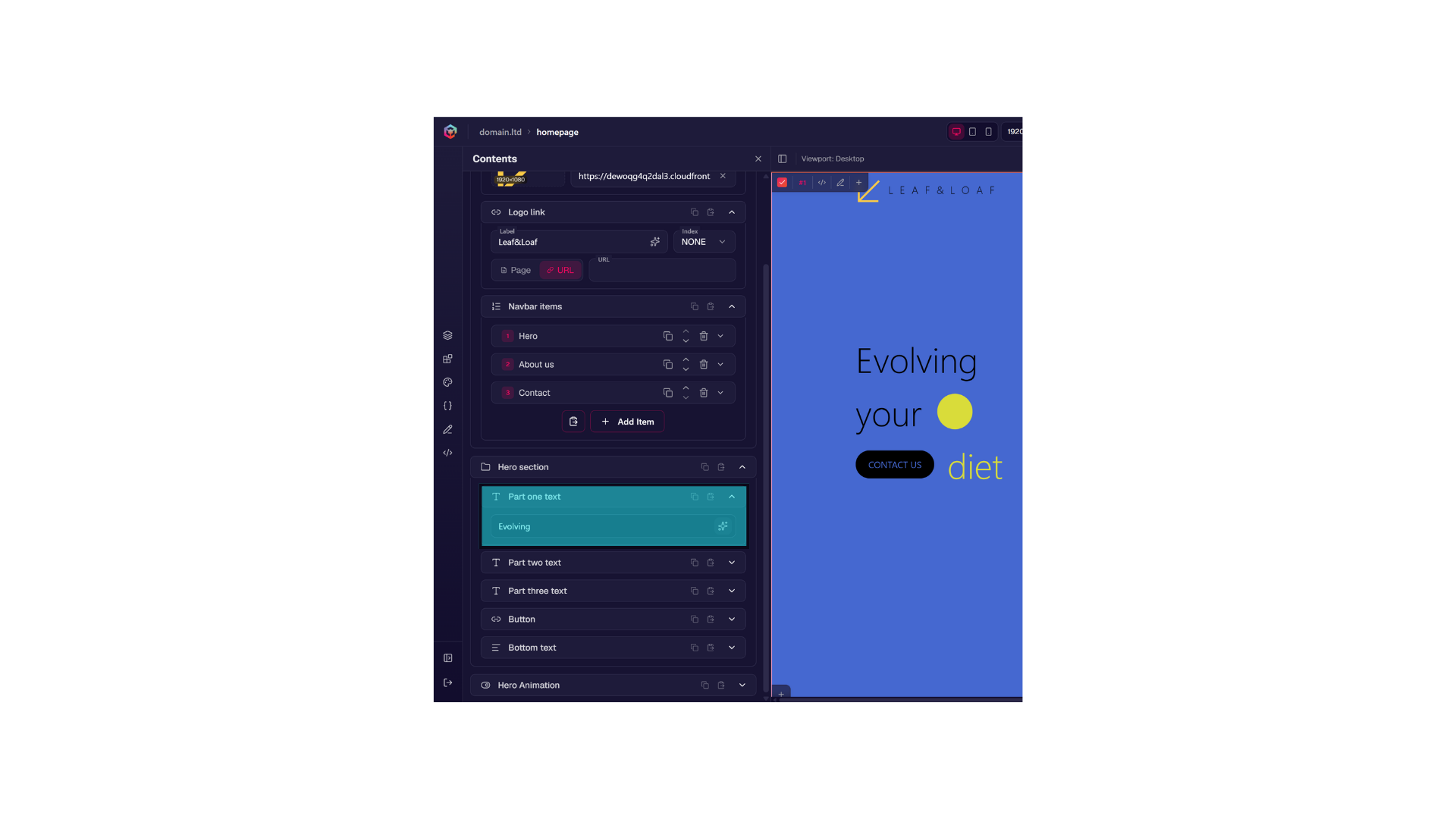
Forcing line breaks will break formatting.
Textarea: A multi-line, plain-text input designed for longer blocks of text (like bios or descriptions).
🔗 Page & URL
URL: Only accepts absolute web addresses. It ensures data integrity but is highly inflexible and will reject plain text or anchor Pages.
Page: A polymorphic (multi-form) picker. It allows editors to choose between an external URL or dynamically map to an internal page within your site, and includes follow directives.
📋 Content
The flexible canvas of the page. Unlike rigid fields, this is a modular stream where editors can freely compose paragraphs, headers, images, pull quotes, and embeds.
Note: It offers maximum creative freedom, but it shifts the burden of maintaining design consistency entirely onto the editor. Use it only when the layout cannot be standardized (such as terms of service or privacy policy pages).
✅ Switch & Select
Switch (Boolean): A binary toggle representing exactly two mutually exclusive states: True/False.
Select (Dropdown): A defined list of explicit options where the editor must choose one (or sometimes multiple) preset values.
📚 Group
A purely organizational field container. It does not alter the front-end layout; instead, it bundles related fields together in the Content Drawer.
As an example: A card group may contain a text field for the title, an image field for the card, and another text field for the description.
⿻ Repeater
A dynamic array container that allows editors to add an indefinite number of identical copies of itself.
As an example: A card section in which the card is a repeater containing a text field for the title, an image field for the card, and another text field for the description. Adding more instances of this repeater adds a new card.